
SleepSpace's Science, Technology, and Research Tool Description
Scientific validation
Scientific validation for sleep technology that people can actually use
SleepSpace brings together sleep measurement, behavioral sleep science, and connected-bedroom technology to help you understand patterns and choose a practical next step. This page describes the peer-reviewed research, NIH- and NSF-supported work, and scientific principles behind the technology, including collaborations with Penn State, the University of Arizona, and the National Institute on Aging.
Sleep is personal. A useful sleep tool needs to respect the difference between a rough night, a changing schedule, an untreated sleep problem, and a pattern that may respond to a more consistent routine. That is why SleepSpace combines device data with the Consensus Sleep Diary, morning feedback, and practical behavior change support.
Research guides the approach, but it also sets boundaries. Consumer devices can be useful for observing trends over time, not for diagnosing sleep disorders or treating data as a perfect picture of every sleep stage. SleepSpace is designed to turn useful information into a calmer next step.
What validation means here
SleepSpace measures, tests, publishes, and learns.
Our work compares consumer-friendly signals with established sleep methods, studies tools carefully, and shares findings through peer-reviewed research. Published findings describe the conditions of each study; the system is built to give you useful context, not another reason to worry about sleep.
How we validate
Evidence before claims
Benchmark measurement
Compare against established sleep methods
SleepSpace research has compared consumer-grade signals with wrist actigraphy and polysomnography, the reference method used in clinical sleep research. This helps clarify what a device can reliably contribute and where it needs diary context or clinical follow-up.
Publish the work
Make methods open to scrutiny
Peer-reviewed publication gives other researchers a chance to inspect methods, challenge conclusions, and build on the findings. That is essential when a technology is intended to shape everyday health behavior.
Study meaningful outcomes
Study sleep in the context of real life
SleepSpace research has examined sleep-wake measurement, auditory stimulation and slow-wave activity, fatigue, cognition, and behavioral sleep support. Each question asks how technology can fit into a sleep routine without treating a single metric as the whole story.
Keep improving
Use evidence to refine the experience
Scientific validation is ongoing. New findings can strengthen a feature, set clearer limits, or change how a tool should be used. That is how sleep technology stays useful as the science advances.
What we study
Four connected areas of sleep research and technology
01. Measure sleep in the real world
Wearables, nearables, and the sleep diary
SleepSpace brings together wearable data, phone and nearable sensing, and the digital Consensus Sleep Diary, so sleep can be understood from more than one signal. [1] The diary captures the parts of a night that a device cannot fully know: how long sleep felt like it took, how restorative the night felt, and what may have affected it. [8] Sleep and cognitive-health research from the SleepSpace team also brings subjective and objective sleep measures together in a clinical-trial setting. [4]
Explore five ways to track sleep02. Study sound and slow-wave activity
Auditory stimulation research
Auditory stimulation is promising, but it must be approached carefully. A published study from the SleepSpace team observed changes in slow-wave activity during non-phase-locked pink-noise stimulation while underscoring the importance of preserving sleep continuity and avoiding disruptive stimulation. [3]
Read the deep sleep guide03. Support the whole sleep routine
Behavioral sleep support that fits real life
SleepSpace offers behavior change support informed by elements commonly used in cognitive behavioral therapy for insomnia. A 2024 Gartenberg co-authored study examines technology-assisted CBT-I+, CBT-I, and sleep hygiene in older adults. [7] The goal is not to chase a perfect sleep score. It is to make bedtime, wake time, and the middle of the night easier to navigate.
Explore CBT-I-based sleep support04. Connect sleep and cognition
Sleep, alertness, and cognitive health
The SleepSpace team has contributed to research on attention, fatigue, cognitive assessment, and multimodal sleep-and-cognition study design in older adults. Dr. Dan Gartenberg's published work on sustained attention and smartphone-based measurement of fatigue-related reaction-time changes helps inform this broader view of sleep health. [4] [5] [6]
Take a sleep assessmentScience in the app
Use evidence as a guide for what to do tonight
Product testing and validation
Test consumer sleep products against outcomes that matter at home
SleepSpace works with companies and research teams to evaluate usability, engagement, and sleep-related outcomes in home settings. Studies can combine wearable and nearable signals, the digital sleep diary, validated questionnaires, and participant feedback so product decisions are informed by more than a single device metric.
Past work has included smart lighting and voice-assistant routines, bedding, and neurotechnology. SleepSpace has validated products for LIFX Smart Bulbs, Google Nest, Ettitude sheets, and the Neurosity Headset, alongside broader research on sound, light, and the sleep environment.
A research-grade workflow
- Collect sleep diary, device, and participant-reported data in one program
- Deliver timed instructions, behavioral content, sound, or light interventions remotely
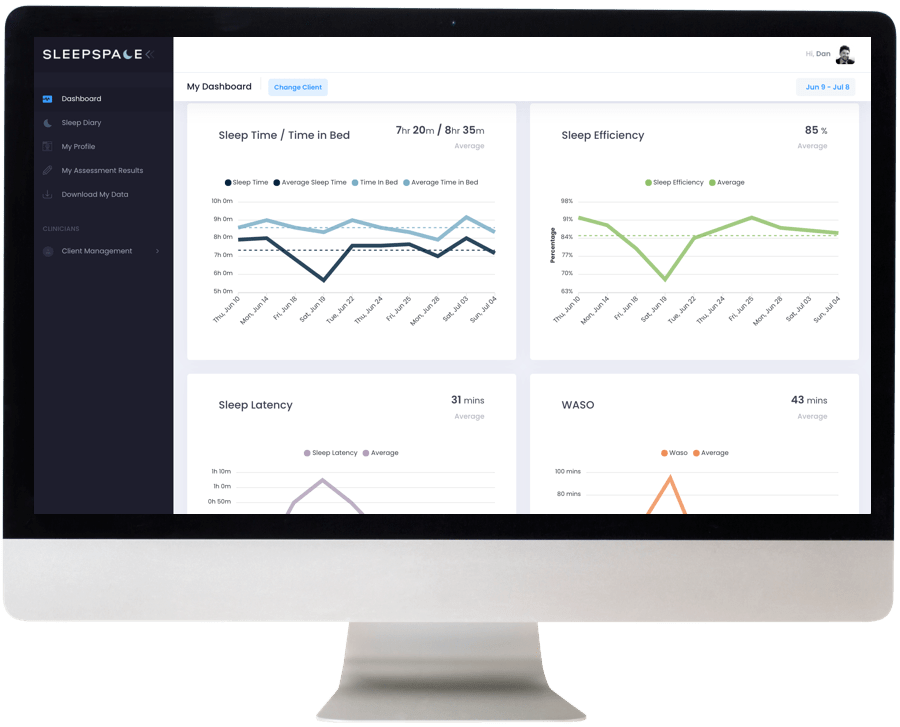
- Monitor study engagement and compliance through a researcher dashboard
- Evaluate sleep solutions in participants' own homes and routines
Use the same platform to design the study, support participants, and review the evidence.
Research highlights
What the published work contributes
Sleep-wake measurement needs context
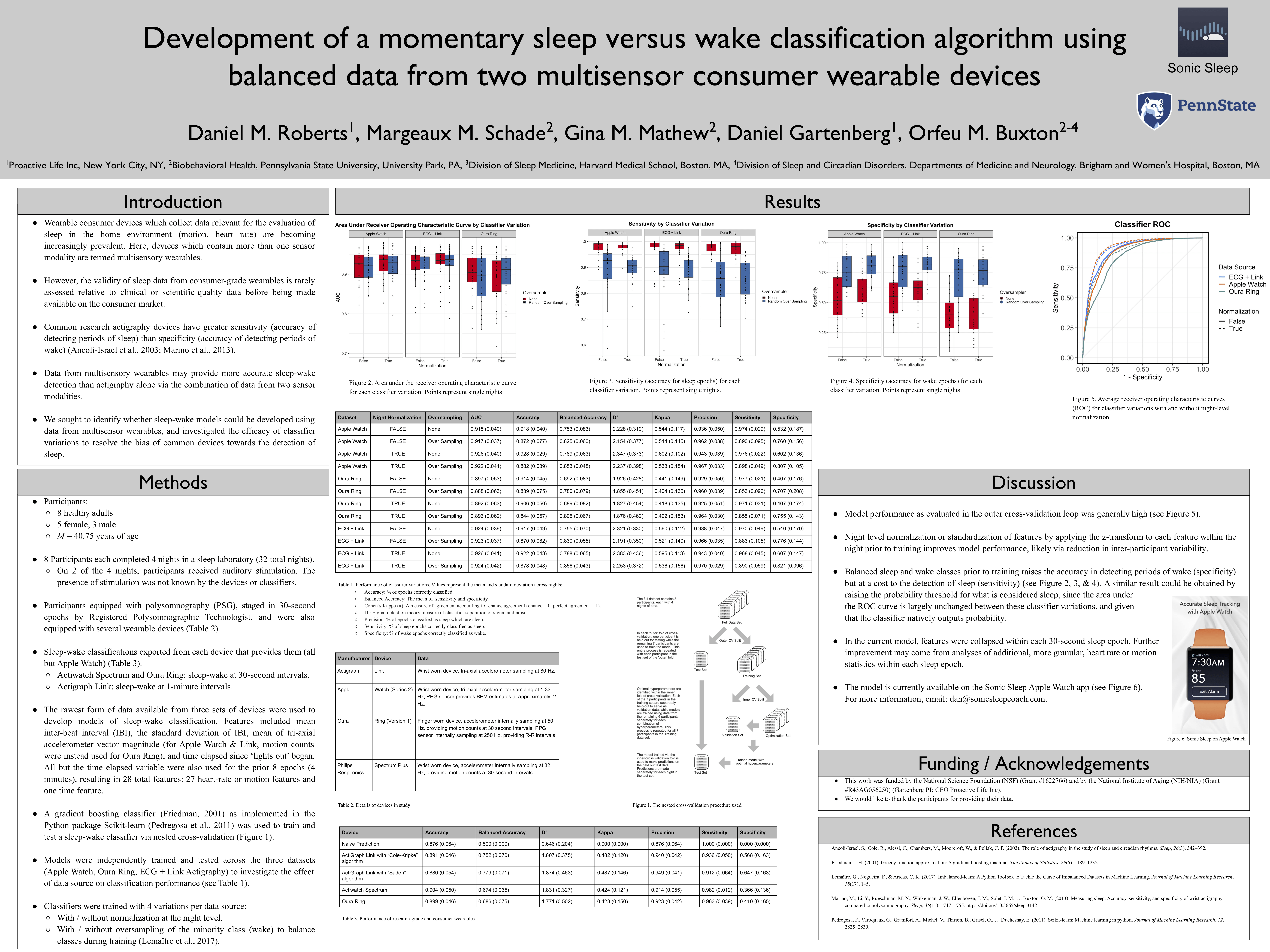
In a peer-reviewed validation study, the SleepSpace team compared multisensor consumer wearables with wrist actigraphy and polysomnography. The practical takeaway is straightforward: consumer devices can be useful for sleep-wake patterns, but they are not a replacement for clinical testing or a definitive record of sleep stages. [1]
Later work developed an open sleep-wake model that can classify data across approximately 24 hours without being told the in-bed period first. It is a meaningful step toward tracking sleep in real life, where schedule and bedtime are not always clean or predictable. [2]
Deep-sleep stimulation requires restraint
A published SleepSpace-team study of non-phase-locked pink noise observed changes in slow-wave activity during stimulation. The same study made an important point: more stimulation is not automatically better. Sleep continuity must come first. These findings describe research conditions, not a promise of the same result for every individual. [3]
Better sleep can be part of a broader cognitive-health conversation
The SleepSpace team has also contributed to a randomized clinical trial methodology for a non-pharmacological, multimodal intervention addressing sleep and cognition in older adults. The study design includes subjective and objective sleep measures alongside cognitive assessment and biomarkers. [4] Dr. Dan Gartenberg's work on sustained attention and mobile measurement of fatigue-related reaction-time changes also supports looking at sleep, daytime alertness, and cognition together. [5] [6]
That does not mean an app diagnoses cognitive impairment or replaces medical care. It means sleep habits, cognitive health, and daily function belong in the same thoughtful conversation, especially when persistent changes in sleep or thinking are present.
Open methods make the field stronger
SleepSpace supports transparent, peer-reviewed work and research collaboration. Science advances when methods can be examined, findings can be challenged, and products improve because evidence changes.
From research to real life
Useful sleep technology starts with a useful question
Start with what you want to change: falling asleep more easily, keeping a steadier schedule, understanding why you wake up tired, or getting a quieter wake-up routine. The best tool is the one that helps you act on that question consistently.
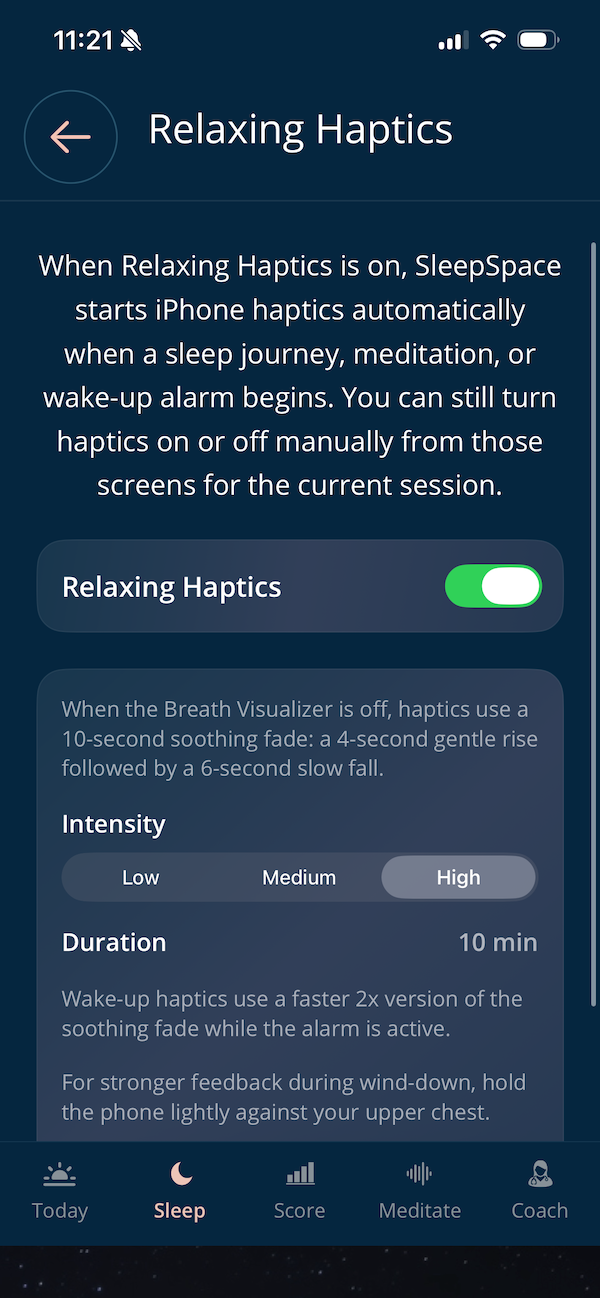
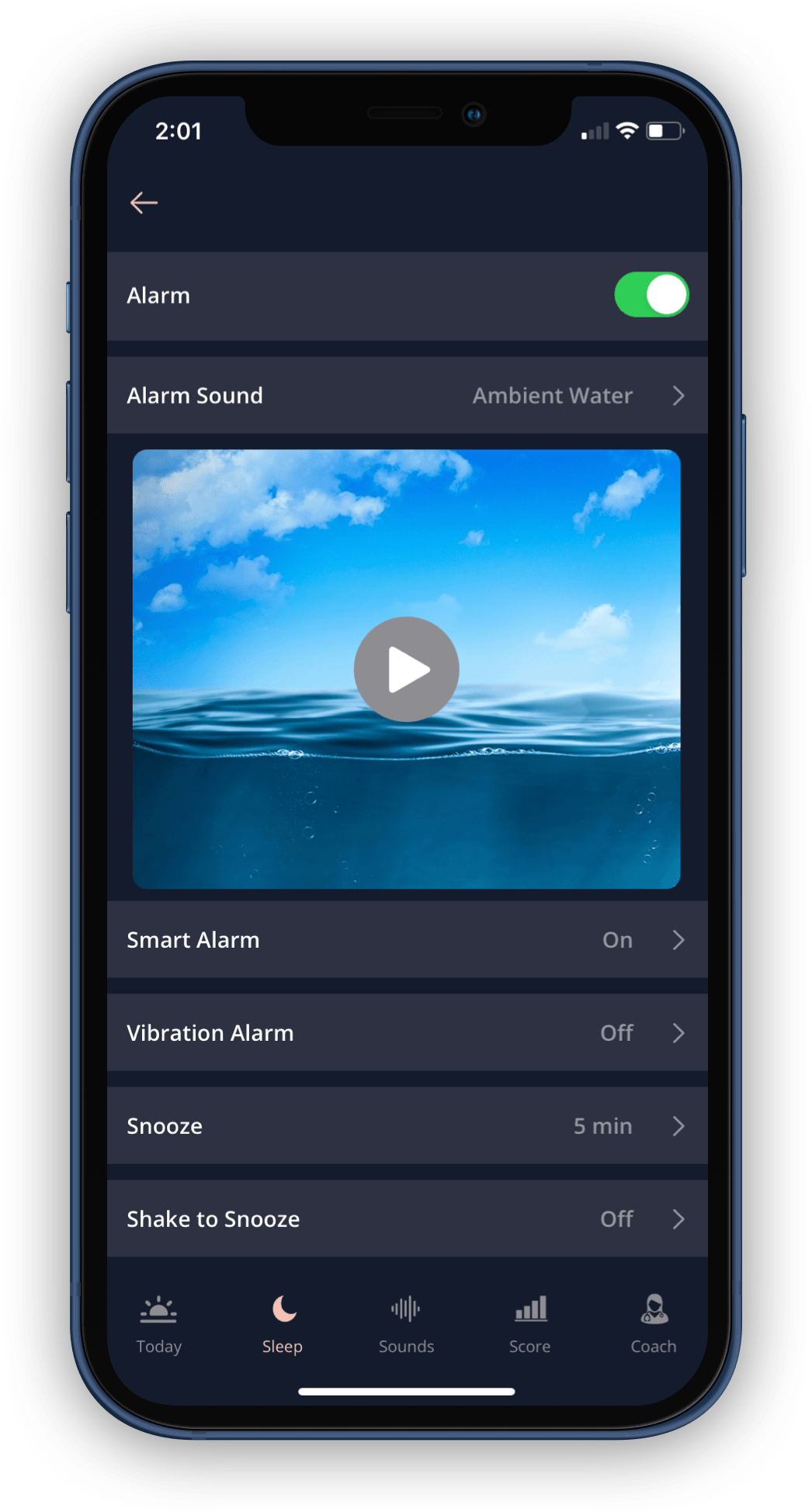
SleepSpace was built to combine the benefits of digital sleep tracking with behavioral tools, guided wind-down content, real-time sleep tracking, and support from a sleep coach or specialist when that is helpful.
For researchers and clinicians
Build better sleep research with us
SleepSpace gives research teams a practical way to follow sleep in daily life. Participants can connect wearables, use phone and nearable sensing, complete the digital Consensus Sleep Diary, and add brief context about their day. The five ways to track sleep make it possible to choose the measurement mix that fits the study rather than forcing every participant into a single device workflow.
- Wearable, phone, and nearable sleep data collected alongside the digital sleep diary
- Ecological momentary assessment (EMA) prompts for sleepiness, mood, stress, symptoms, and daily context
- M2C2 cognitive-assessment integrations for pairing sleep patterns with brief measures of attention, reaction time, and cognitive performance
- Timed study instructions, individualized content, and researcher-facing engagement review
Sleep, context, and cognition in one study
Morning diary data can show how the night felt. Device and nearable data can add objective context. EMA can capture what changes during the day, while M2C2 assessments can help researchers examine how sleep patterns relate to attention and cognitive performance over time. Dr. Dan Gartenberg's published work on sustained attention and mobile measurement of fatigue-related reaction-time change helps inform this approach. [5] [6]
Research partnerships support studies that meet people where sleep actually happens: at home, across changing schedules, and between study visits.
Learn about SleepSpace research partnershipsExplore the evidence in practice
Related SleepSpace resources
Measurement
Digital Sleep Diary
Combine standardized self-report with device data and morning context.
Devices
Wearables and Nearables
Use connected devices thoughtfully without mistaking them for a clinical diagnosis.
Deep sleep
Deep Sleep Guide
Understand deep sleep, delta waves, and what a restorative night can look like.
Behavior change
Falling Asleep Guide
Use practical strategies when the hardest part of sleep is settling at bedtime.
Circadian health
Circadian Rhythm
Build a schedule that gives your internal clock more consistent cues.
Product testing
Validate a Sleep Product
Evaluate consumer sleep products with research-grade measurement and real-world study tools.
Peer-reviewed publications and scientific sources
- Roberts DM, Schade MM, Mathew GM, Gartenberg D, Buxton OM. Detecting sleep using heart rate and motion data from multisensor consumer-grade wearables, relative to wrist actigraphy and polysomnography. Sleep. 2020.
- Roberts DM, Schade MM, Master L, et al. Performance of an open machine learning model to classify sleep/wake from actigraphy across approximately 24-hour intervals without knowledge of rest timing. Sleep Health. 2023.
- Schade MM, Mathew GM, Roberts DM, Gartenberg D, Buxton OM. Enhancing slow oscillations and increasing N3 sleep proportion with supervised, non-phase-locked pink noise and other non-standard auditory stimulation during NREM sleep. Nature and Science of Sleep. 2020.
- Emert SE, Taylor DJ, Gartenberg D, et al. A non-pharmacological multi-modal therapy to improve sleep and cognition and reduce mild cognitive impairment risk: Design and methodology of a randomized clinical trial. Contemporary Clinical Trials. 2023.
- Carney CE, Buysse DJ, Ancoli-Israel S, et al. The Consensus Sleep Diary: Standardizing prospective sleep self-monitoring. Sleep. 2012.
- de Zambotti M, Goldstein C, Cook J, et al. State of the science and recommendations for using wearable technology in sleep and circadian research. Sleep. 2024.
- Gartenberg D, Gunzelmann G, Hassanzadeh-Behbahani S, Trafton JG. Examining the role of task requirements in the magnitude of the vigilance decrement. Frontiers in Psychology. 2018.
- Brunet JF, Dagenais D, Therrien M, Gartenberg D, Forest G. Validation of sleep-2-Peak: A smartphone application that can detect fatigue-related changes in reaction times during sleep deprivation. Behavior Research Methods. 2017.
- Schade M, Roberts D, Gartenberg D, Taylor D, Emert S, Nagy S, Torres-Negron A, Russell M, Mueller M, Gamaldo A, Buxton O. Randomized controlled trial of telehealth in older adults: Technology-assisted CBT-I+, CBT-I, and sleep hygiene. Sleep. 2024.
Earlier journal articles and dissertation
- Youmans RJ, Smith MA, Gartenberg D, Sarbone B, Liu S, Higgins J, Lee P, Penaranda N, Liu S. Fleet: A distributed information gathering and processing system for the alleviation of commercial air travel anxiety. Journal of Air Traffic Control. 2014;56(1):32-38.
- Gartenberg D, Thornton R, Mortazavi M, Pfannenstiel D, Taylor D, Parasuraman R. Collecting health-related data on the smart phone: Mental models, cost of collection, and perceived benefit of feedback. Personal and Ubiquitous Computing. 2013;17(3):561-570.
- Gartenberg D. A Comprehensive Computational Model of Sustained Attention. Doctoral dissertation, George Mason University. 2016.
Conferences, chapters, and posters
- Roberts DM, Schade MM, Mathew GM, Gartenberg D, Buxton OM. Development of a momentary sleep versus wake classification algorithm using balanced data from two multisensor consumer wearable devices. Society of Behavioral Sleep Medicine. 2019.
- Schade MM, Roberts DM, Gartenberg D, Mathew GM, Buxton OM. Auditory stimulation during sleep transiently increases delta power and all-night proportion of NREM stage 3 sleep while preserving total sleep time and continuity. Society for Neuroscience. 2018.
- Brunet J, Therrien M, Hebert K, Tzivanapoulos N, Gartenberg D, Forest G. Greater decline in reaction time performance on a smartphone application during sleep deprivation is linked to extraversion. Associated Professional Sleep Societies. 2015.
- Gartenberg D, Gunzelmann G, Veksler B, Trafton JG. Improving vigilance analysis methodology: Questioning the successive versus simultaneous distinction. Human Factors and Ergonomics Society Annual Meeting. 2015.
- Brunet J, Therrien M, Gartenberg D, Forest G. Validation of a smartphone psychomotor vigilance application: Preliminary data. Associated Professional Sleep Societies. 2014.
- Gartenberg D, Veksler B, Gunzelmann G, Trafton JG. An ACT-R process model of the signal duration phenomenon of vigilance. Human Factors and Ergonomics Society Annual Meeting. 2014.
- Youmans RJ, Smith MA, Gartenberg D, Liu S, Higgins J, Penaranda N, Sarbone B. Fleet: A distributed information gathering and processing system for the alleviation of commercial air travel anxiety. Air Traffic Control Association Annual Conference and Exposition. 2013.
- Therrien M, Hebert M, Gartenberg D, De Koninck J, Forest G. Awareness of reaction time variations with sleep schedule measured on a smartphone can improve sleep habits and performance. Associated Professional Sleep Societies. 2013.
- Hebert M, Gartenberg D, De Koninck J, Therrien M. Alertness measured by average reaction time on a smartphone predicts physical performance. Associated Professional Sleep Societies. 2013.
- Gartenberg D, Forest G, Therrien M. A smartphone PVT application is successfully used to identify one's sleep schedule associated with better daytime alertness. Associated Professional Sleep Societies. 2012.
- Therrien M, Hebert M, Gartenberg D, De Koninck J, Forest G. High correlation and predictive value between alertness measured by reaction time and physical performance. Associated Professional Sleep Societies. 2012.
- Eisert J, Gartenberg D, Thornton R, Youmans R. Optimal interface location and limits of gesture proficiency in an automobile. Human Factors and Ergonomics Society Annual Meeting. 2012.
- Gartenberg D, McGarry R, Pfannenstiel D, Cisler D, Shaw T, Parasuraman R. Development and evaluation of a neuroergonomic smart phone application to assess vigilance and arousal. International Conference on Applied Human Factors and Ergonomics. 2012.
- Gartenberg D, Parasuraman R. Understanding brain arousal and sleep quality using a neuroergonomic smart phone application. In: Advances in Understanding Human Performance. International Conference on Applied Human Factors and Ergonomics. 2010.